


The following article provides a concise summary of my study titled «Uses and Gratifications of “The Last Dance” and the Viewing Intention for a Chicago Bulls Game: A Sports Documentary Series as a Promotional Tool», published in the 2024 IGI Global publication «Exploring the Impact of OTT Media on Global Societies», edited by Nithin Kalorth. Some may recall that I conducted a case study on this subject in 2020. However, I have since re-evaluated the model for this peer-reviewed publication and expanded the case study to offer greater depth.
Abstract
This study explores uses and gratifications of watching “The Last Dance,” a sports documentary series that premiered in 2020 on ESPN and Netflix about Michael Jordan and the 1990s Chicago Bulls basketball team. It examines the influence of uses and gratifications on brand-user imagery fit and the intention to watch a Chicago Bulls game after having seen the show. Primary data was collected through a self-administered online questionnaire from people that had been watching “The Last Dance.” Results were computed through exploratory and confirmatory factor analysis and structural equation modeling. Results suggest that the realistic nature of the story and characters portrayed in “The Last Dance,” the relaxation experienced from watching the show, and social interaction with other viewers influence the intention to watch a Chicago Bulls game when mediated through brand-user imagery fit. These are new findings to the respective field of study and contribute towards the understanding for producing similar documentaries.
Introduction
Documentary films are recognised for their creative representation of real events, aimed at entertaining, informing, and influencing viewers (Hughes, 1996; Juel, 2006; Riess, 2019). The evolution of television in the second half of the 20th century marked a significant phase, leading to broader audience reach and enhanced financial backing for documentary production, thereby improving show quality (Diggs-Brown, 2011). Advancements in technology and the rise of the internet and broadband connectivity have further transformed media consumption habits, enabling viewers to access content more conveniently through various online platforms (Balbi & Magaudda, 2018).
The sports industry has capitalised on this shift by providing non-fictional content such as behind-the-scenes footage, interviews, and expert commentary, leveraging the potential of social media to engage fans with short-form videos, although they lack the narrative depth of long-form documentaries (Goldsmith, 2013; Hipke & Hachtmann, 2014; Newman et al., 2013; Vogan, 2014). Recognising the value of sports documentaries, streaming services like Amazon Prime, Netflix, and DAZN have invested in original sports documentary series, highlighting the lives and careers of athletes and teams (Iordache et al., 2023). These documentaries not only entertain but also fulfil viewers’ fundamental desires such as curiosity and social status (Reiss & Wiltz, 2004), thereby supporting the business case for their production.
The documentary series “The Last Dance,” focusing on Michael Jordan and the Chicago Bulls, exemplifies the effective use of a sports documentary as a promotional tool, influencing consumer behaviour and brand association (Adweek, 2020; ESPN, 2023; Fetchko et al., 2018; Weinish & Lev, 2021), similar to how NFL Films promote the NFL and its teams as a spectator sports product through documentary and documentary-style productions (Vogan, 2014). These narratives have significantly influenced consumer behaviour and brand association, making them compelling subjects for academic and professional exploration. The study aims to investigate the impact of sports documentaries on media consumption, the role of over-the-top (OTT) platforms, and their influence on consumer behaviour, using “The Last Dance” as a case study to explore how such content can enhance the connection between sports brands and their fans. The research is guided by the following research question: “How do uses and gratifications of watching the docuseries “The Last Dance” influence brand-user imagery fit of its viewers and the intention to watch a Chicago Bulls game?”
Theoretical background
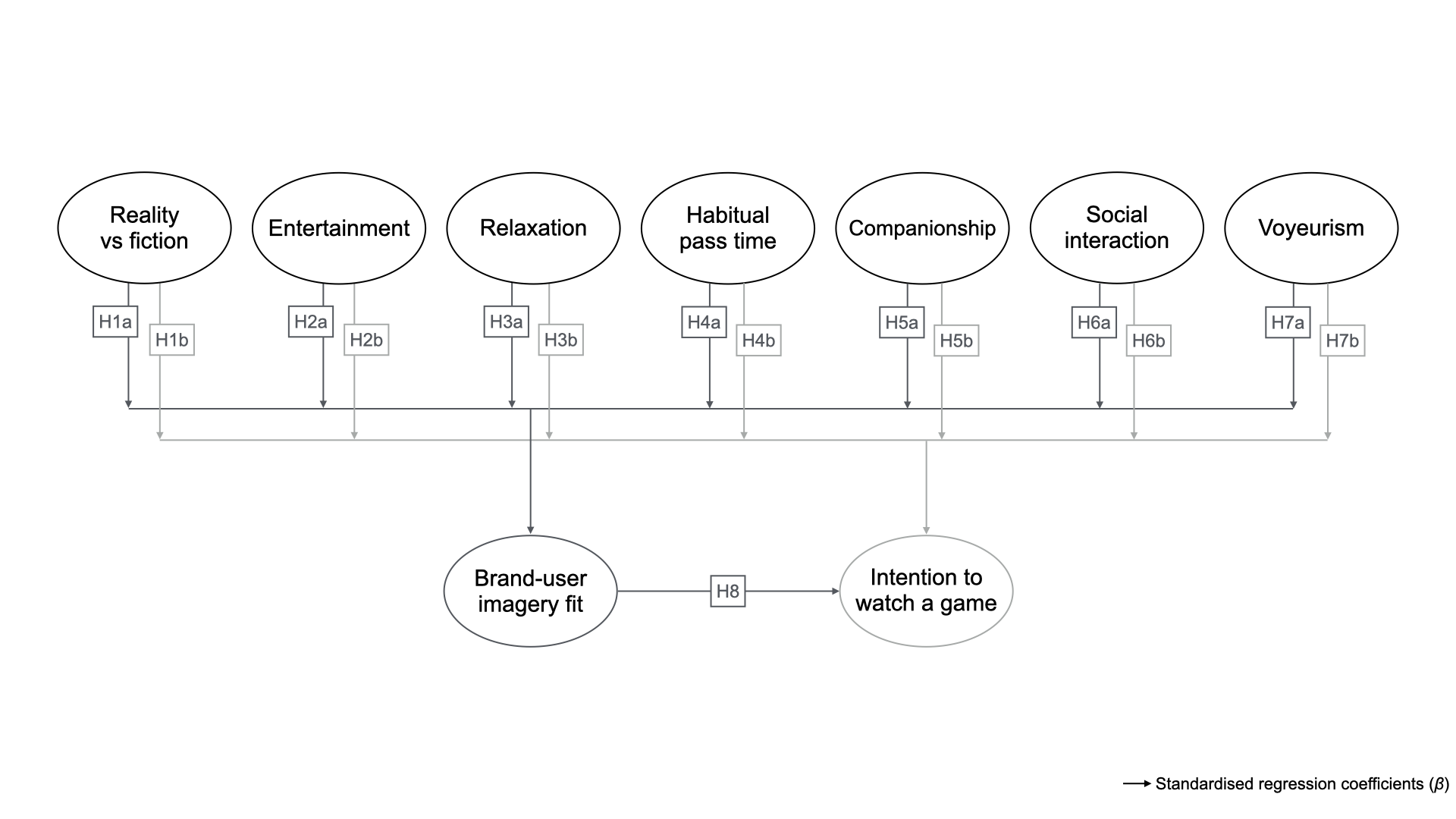
Using frameworks by Papacharissi and Mendelson (2007) and Rubin (1983), this study examines viewer engagement and satisfaction with “The Last Dance,” incorporating seven uses and gratifications: reality versus fiction, entertainment, relaxation, habitual pass time, companionship, social interaction, and voyeurism. It extends the model with Lee and Watkins (2016) to assess influences on brand-user imagery fit and viewing intentions for Chicago Bulls games.
Uses and gratifications
Shifting focus from “What do the media do to people?” to “What do people do with the media?”, Katz (1959) integrated mass communication with social science and popular culture. Gantz (1981) further explored this in televised sports, identifying four gratifications: thrill in victory, relaxation, learning, and passing time, but noted limitations. This study extends the framework with contributions from Papacharissi and Mendelson (2007), Trail (2012), Nabi et al. (2003), and Lee and Watkins (2016), examining how these gratifications influence viewer connection with “The Last Dance” and intention to watch Chicago Bulls games.
- Reality versus fiction. Papacharissi and Mendelson (2007) initially merged “reality versus fiction” and “entertainment” into a single “reality entertainment” factor. This study separates them based on exploratory factor analysis results, identifying “reality versus fiction” as a distinct factor, emphasising the realistic nature of reality-based programming. This distinction is crucial in sports documentaries like “The Last Dance,” where authenticity enhances brand-user connections and purchase intentions, and sports brand placement is seen as more congruent than in non-sports contexts (Arya et al., 2019; Kucharska et al., 2020; Cheng & Kim, 2016).
- Entertainment engages viewers through emotions, as outlined by Pine & Gilmore (2020), and Schmitt (1999) emphasises the framing of consumption experiences through communication. “The Last Dance” leverages compelling athlete stories to evoke viewer emotions, while enhancing brand associations (see Vogan, 2014; Schmitt, 1999). Emotional engagement with athlete narratives can strengthen connections to associated brands and products (Smilansky, 2017).
- Relaxation through TV or streaming, described by Zillmann (1982) as a counter to daily stress, is exemplified by watching a show like the “The Last Dance” for escapism and immersion into sports narratives (Trail, 2012). Viewers prioritise entertainment over outcomes, fostering escapism and engagement with the series, thereby enhancing commitment to the show and its subjects, potentially boosting purchase intentions for related products (Ebbrecht, 2007; Vogan, 2014; Hall et al., 2010; Sokolova & Kefi, 2020).
- Habitual pass time, engaging viewers when other options are scarce (Papacharissi & Mendelson, 2007), is amplified by the vast, easily accessible online content related to favourite sports teams or athletes (Nielsen.com, 2022). This accessibility enhances fan experiences and brand associations, potentially increasing the desire to watch sports media (Sutera, 2013). Anghelcev et al. (2021) suggest binge-watching, as in the case of Netflix with “The Last Dance,” improves enjoyment and viewer-character connections, fostering stronger associations.
- Companionship, using TV as a means to alleviate loneliness (Perse & Ferguson, 1993), is significant for viewers who favour reality-based shows for their realistic appeal (Papacharissi & Mendelson, 2007). This aspect influences OTT platform choice, driven by the desire for social presence, perceived through mediated interactions (Menon, 2022; Lim et al., 2015). Such virtual companionship enhances social connections, potentially enriching the viewing experience of series like “The Last Dance” by bridging psychological distances (Rettie, 2003; Sutera, 2013).
- Social interaction. Trail (2012) highlights social interaction as the drive to connect with like-minded individuals for a sense of belonging. Studies, including Flayelle et al. (2018), show its importance in choosing to watch TV series. Moreover, social interactions during sports viewing enhance enjoyment, adding social utility to the experience (Nabi et al., 2003; Leslie-Walker & Mulvenna, 2022). Communal engagement via social TV, where live social media interaction accompanies viewing, motivates continued watching (Lim et al., 2015).
- Voyeurism, traditionally associated with deriving pleasure from secretly observing others, extends beyond its sexual connotations to include the enjoyment of accessing the private lives of others through electronic media (Cambridge Dictionary, 2023; Baruh, 2009). In reality TV, voyeurism reflects a desire for connection, surprise, and personal insight, diverging from its psychiatric definition to encompass a broader, more colloquial understanding of the term (Nabi et al., 2003).
Brand-user imagery fit
Brand image and equity are shaped by associations that differentiate products and align with consumer self-concept, influencing attitudes and purchasing behaviours (Keller, 1993; Lee & Watkins, 2016). Brand-user imagery fit, the compatibility between a consumer and brand users (Miller & Mills, 2012), is examined in the context of “The Last Dance” viewers and sports brands like the Chicago Bulls. This study explores how uses and gratifications affect viewer-brand alignment and subsequent purchasing motivations.
Conceptual model
This study examines how uses and gratifications from watching “The Last Dance” affect brand-user imagery fit and the desire to watch a Chicago Bulls game, exploring the impact on viewer perception and behavioural intentions, as summarised in Figure 1.

Methodology
This study adopts a positivist approach to explore the link between uses and gratifications, brand-user imagery fit, and the intent to watch Chicago Bulls games, using primary data from an online survey distributed to “The Last Dance” viewers. Data collection occurred from May 6 to May 8, 2020, aligning with the release of the series’ seventh episode, capturing fresh viewer responses before the season finale.
Measurement tool
A 26-item online questionnaire, based on a 5-point Likert scale, assessed the impact of “The Last Dance” on brand-user imagery fit and Chicago Bulls viewing intentions. The scales were drawn from Papacharissi and Mendelson (2007), Trail (2012), Nabi et al. (2003), and Lee and Watkins (2016). Additional questions covered demographics and streaming preferences, with data analysis conducted through Exploratory Factor Analysis (EFA), Confirmatory Factor Analysis (CFA), and Structural Equation Modeling (SEM) using IBM SPSS and Amos.
Respondents of the study
The study’s sample included 442 respondents, predominantly male (90.3%) and largely from Western Europe (90.5%). The majority age group was 35 to 44 years (40.3%). Netflix was the most-used streaming platform among nearly half of the respondents (49.5%).
Discussion
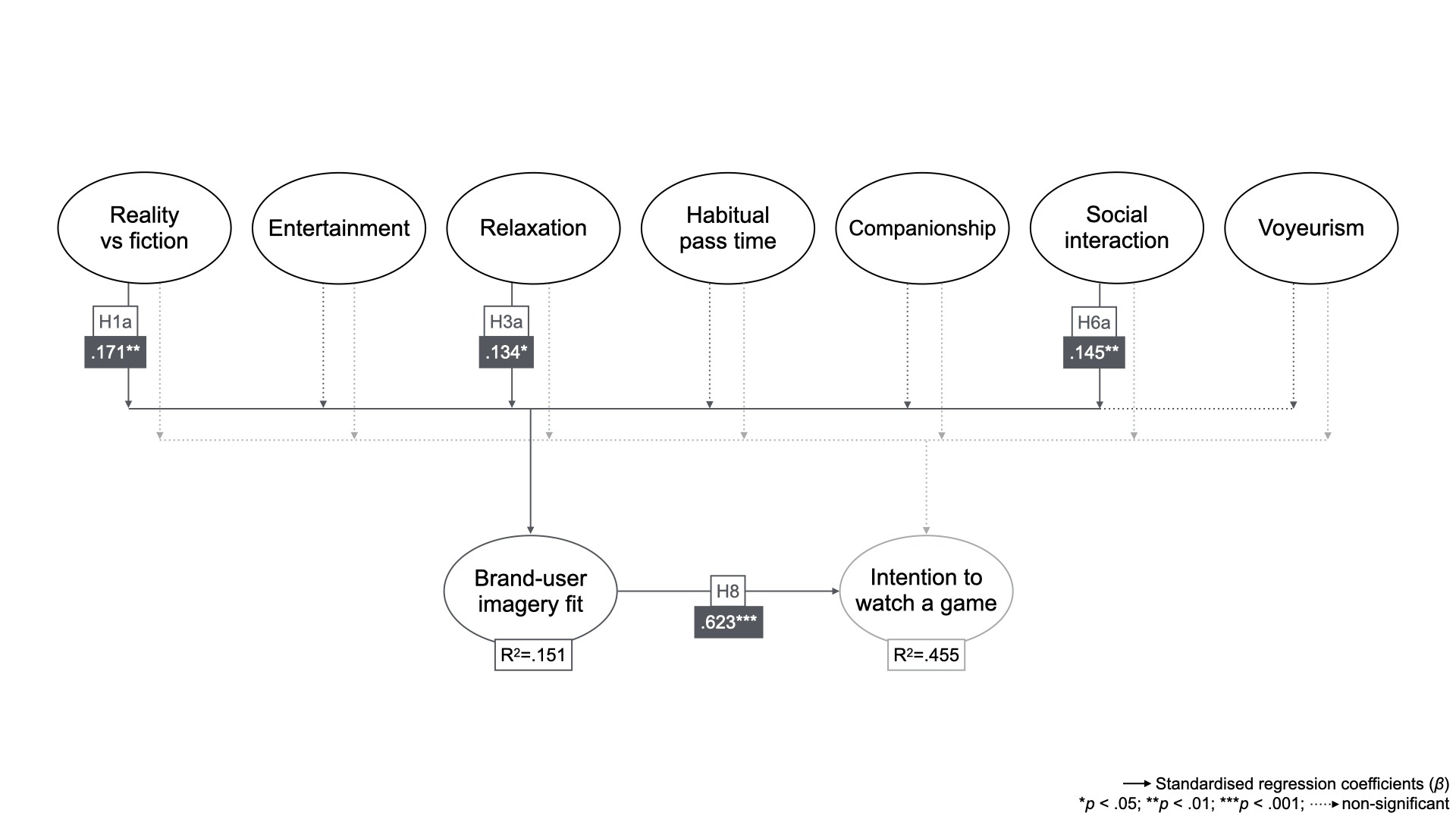
Reality versus fiction, relaxation, and social interaction significantly enhance brand-user imagery fit, while other uses and gratifications do not impact it. None directly influence the intent to watch a Chicago Bulls game post-viewing “The Last Dance”. However, brand-user imagery fit positively affects this intention, serving as a mediator between specific uses and gratifications and the desire to watch a game, suggesting its pivotal role in translating docuseries engagement into viewing behavior. Figure 2 offers a visualisation of the significant causal relationships found by this study.
Reality versus fiction
“The Last Dance” enhances viewer-brand alignment through its realistic portrayal of characters and events, making it the second-strongest reason for its viewership. Sports documentaries like this offer an authentic view into the sports world, capturing real-life struggles and triumphs (Vogan, 2014; Boyle, 2020). This authenticity fosters emotional investment, empathy, and relatability between viewers and protagonists, such as Michael Jordan and his Chicago Bulls teammates, by showcasing their vulnerabilities and achievements (Schmitt, 1999; Pine & Gilmore, 2020; McDonald, 2007). The documentary’s exploration of universal themes like determination and resilience mirrors viewers’ own experiences, inspiring perseverance (Sarkar & Soni, 2023). This mediated connection to the characters strengthens the intention to watch a Chicago Bulls game, highlighting the impact of realism and authentic storytelling on viewer engagement and brand association (Chung & Cho, 2014; Sokolova & Kefi, 2020).
Relaxation
Relaxation, a key viewing motive, coupled with the show’s focus on Michael Jordan and the 1990s Bulls, fosters a strong emotional bond with viewers (Won & Kitamura, 2006; Tefertiller & Sheehan, 2019; Iordache et al., 2023). The documentary’s aesthetic, blending archival footage and interviews, adds nostalgia and authenticity, enhancing empathy with its protagonists (Ebbrecht, 2007; Stadler, 2017). This emotional investment, deepened by the narrative’s suspense and the viewers’ affinity for basketball, strengthens the connection to the Chicago Bulls, encouraging game viewership (Beck et al., 2012; Lee & Watkins, 2016; Weinish & Lev, 2021).
Social interaction
While not the primary motive for viewing, shared viewing fosters a sense of community, heightening emotional engagement and strengthening the connection to the media product (Lim et al., 2015). Watching with like-minded individuals creates camaraderie and collective excitement during pivotal moments, enriching the overall experience (Trail, 2012; Sutera, 2013). Discussions and exchanges of perspectives deepen understanding and bond viewers collectively to the narrative (Nabi et al., 2003; Anghelcev et al., 2021). Online communities expand this interaction, enhancing the sense of belonging and the meaningfulness of the viewing experience (Newman et al., 2013).
Brand-user imagery fit
The alignment between “The Last Dance” and its viewers’ qualities and values positively influences their intention to watch a Chicago Bulls game. The documentary’s portrayal of Michael Jordan’s commitment, competitiveness, and overcoming challenges resonates with viewers who value determination and perseverance (Mancini, 2013). Additionally, the show’s exploration of cultural impact and the sense of community around the Chicago Bulls can influence fans’ intentions to watch games (Lee & Watkins, 2016). The examination of rivalries and the emotional aspects of sports storytelling enhance engagement and anticipation, further motivating viewers to watch games (Vogan, 2014).
Conclusion
This study reveals that the realistic portrayal, relaxation, and social interaction while watching “The Last Dance” impact viewers’ intention to watch a Chicago Bulls game through the alignment with the established brand-user image and self-concept. These elements should be emphasised in promotional materials to enhance engagement. The documentary’s real struggles and universal themes inspire viewers, while relaxation fosters emotional investment. Combining documentary and feature film elements enhances credibility. Social interaction with like-minded viewers deepens connections, fostering camaraderie and a shared understanding. Additionally, aligning these elements with viewers’ qualities and values can further influence their intention to watch a game.
Limitations and future research
The study’s limitations include a predominantly male sample (90.3%), potential gender-related differences in gratifications, and a focus on Western European viewers (90.5%), limiting generalisability to other regions and American audiences. Future research should include diverse gender samples and explore regional variations. Examining the documentary’s impact on different age groups and social classes would also be beneficial.
References
- Anghelcev, G., Sar, S., Martin, J. D., & Moultrie, J. L. (2021). Binge-watching serial video content: exploring the subjective phenomenology of the binge-watching experience. Mass Communication and Society, 24(1), 130–154.
- Arya, V., Verma, H., Sethi, D., & Agarwal, R. (2019). Brand authenticity and brand attachment: How online communities built on social networking vehicles moderate the consumers’ brand attachment. IIM Kozhikode Society & Management Review, 8(2), 87–103.
- Balbi, G., & Magaudda, P. (2018). A history of digital media: An intermedia and global perspective. Routledge.
- Baruh, L. (2009). Publicized intimacies on reality television: An analysis of voyeuristic content and its contribution to the appeal of reality programming. Journal of Broadcasting & Electronic Media, 53(2), 190–210.
- Beck, D., Hellmueller, L. C., & Aeschbacher, N. (2012). Factual entertainment and reality TV. Communication Research Trends, 31(2), 4–27.
- Boyle, R. (2020). A new Golden Age? In R. Steen, J. Novick, & H. Richards (Eds.), Routledge Handbook of Sports Journalism (pp. 355–358). Routledge.
- Cambridge Dictionary. (2023). Voyeurism. https://dictionary.cambridge.org
- Cheng, L., & Kim, S. (2016). The relationship between brand-program congruency and purchase intention. International Journal of Applied Sports Sciences, 28(2), 123–136.
- Chung, S., & Cho, H. (2014). Parasocial relationship via reality TV and social media: its implications for celebrity endorsement. In Proceedings of the ACM International Conference on Interactive Experiences for TV and Online Video (pp. 47–54).
- Diggs-Brown, B. (2011). Strategic public relations: An audience-focused approach. Cengage Learning.
- Ebbrecht, T. (2007). Docudramatizing history on TV: German and British docudrama and historical event television in the memorial year 2005. European Journal of Cultural Studies, 10(1), 35–53.
- ESPN. (2023). The Last Dance: The untold story of Michael Jordan’s Chicago Bulls. https://www.espn.com
- Fetchko, M. J., Roy, D. P., & Clow, K. E. (2018). Sports marketing. Routledge.
- Goldsmith, B. (2013). “SportTV”: The legacies and power of television. In B. Hutchins & D. Rowe (Eds.), Digital media sport: Technology, power and culture in the network society (pp. 52–65). Routledge.
- Flayelle, M., Canale, N., Vögele, C., Karila, L., Maurage, P., & Billieux, J. (2019). Assessing binge-watching behaviors: Development and validation of the “Watching TV Series Motives” and “Binge-watching Engagement and Symptoms” questionnaires. Computers in Human Behavior, 90, 26–36.
- Gantz, W. (1981). An exploration of viewing motives and behaviors associated with television sports. Journal of Broadcasting & Electronic Media, 25(3), 263–275.
- Hipke, M., & Hachtmann, F. (2014). Game changer: A case study of social-media strategy in Big Ten athletic departments. International Journal of Sport Communication, 7(4), 516–532.
- Iordache, C., Raats, T., & Mombaerts, S. (2023). The Netflix original documentary, explained: Global investment patterns in documentary films and series. Studies in Documentary Film, 17(2), 151–171.
- Juel, H. (2006). Defining documentary film. POV A Danish Journal of Film Studies, 22, 5–15.
- Keller, K. L. (1993). Conceptualizing, measuring, and managing customer-based brand equity. Journal of marketing, 57(1), 1–22.
- Kucharska, W., Confente, I., & Brunetti, F. (2020). The power of personal brand authenticity and identification: top celebrity players’ contribution to loyalty toward football. Journal of Product & Brand Management, 29(6), 815–830.
- Lee, J. E., & Watkins, B. (2016). YouTube vloggers’ influence on consumer luxury brand perceptions and intentions. Journal of Business Research, 69(12), 5753–5760.
- Leslie-Walker, A., & Mulvenna, C. (2022). The Football Association’s Women’s Super League and female soccer fans: Fan engagement and the importance of supporter clubs. Soccer & Society, 23(3), 314–327.
- Lim, J. S., Hwang, YC, Kim, S., & Biocca, F. A. (2015). How social media engagement leads to sports channel loyalty: Mediating roles of social presence and channel commitment. Computers in Human Behavior, 46, 158–167.
- Mancini, G. A. (2013). Can the effects of brand user imagery congruence be important if the brand is not as well known? Journal of International Management Studies, 13(4), 85.
- Menon, D. (2022). Purchase and continuation intentions of over-the-top (OTT) video streaming platform subscriptions: a uses and gratification theory perspective. Telematics and Informatics Reports, 5.
- Nabi, R. L., Biely, E. N., Morgan, S. J., & Stitt, C. R. (2003). Reality-based television programming and the psychology of its appeal. Media Psychology, 5, 303–330.
- Newman, T., Peck, J., Harris, C., Wilhide, B. (2013). Social media in sport marketing. Holcomb Hathaway Publishers.
- Nielsen.com. (2022). Sports fandom is increasing, powered by new digital platforms, global report finds. https://www.nielsen.com
- Papacharissi, Z., & Mendelson, A. L. (2007). An exploratory study of reality appeal: Uses and gratifications of reality TV shows. Journal of Broadcasting & Electronic Media, 51(2), 355–370.
- Perse, E. M., & Ferguson, D. A. (1993). The impact of the newer television technologies on television satisfaction. Journalism Quarterly, 70(4), 843–853.
- Pine, B. J., & Gilmore, J. H. (2020). The experience economy: Competing for customer time, attention, and money. Harvard Business Review Press.
- Reiss, S., & Wiltz, J. (2004). Why people watch reality TV. Media Psychology, 6(4), 363–378.
- Riess, S. (2019). Sport, Representation and culture in the modern world, 1920-2020. Faculty Research and Creative Activities Symposium, November 15, Northeastern Illinois University. https://neiudc.neiu.edu
- Rettie, R. (2003). Connectedness, awareness, and social presence. Paper presented at the 6th International Presence Workshop, Aalborg, Denmark.
- Rubin, A. (1983). Television uses and gratifications: The interactions of viewing patterns and motivations. Journal of Broadcasting, 27(1), 37–51.
- Sarkar, S., & Soni, M. J. (2023). Is Reality Less Real? Proliferation of Sports Documentaries in a Locked-Down World. In B. Basu, M. Desbordes, & S. Sarkar (Eds.), Sports Management in an Uncertain Environment (pp. 221-253). Springer.
- Schmitt, B. (1999). Experiential marketing: How to get customers to sense, feel, think, act, relate to your company and brands. Free Press.
- Smilansky, S. (2017). Experiential marketing: A practical guide to interactive brand experiences. Kogan Page Publishers.
- Sokolova, K., & Kefi, H. (2020). Instagram and YouTube bloggers promote it, why should I buy? How credibility and parasocial interaction influence purchase intentions. Journal of Retailing and Consumer Services, 53.
- Sutera, D. (2013). Sports Fans 2.0: How Fans Are Using Social Media to Get Closer to the Game. Scarecrow Press.
- Tefertiller, A., & Sheehan, K. (2019). TV in the streaming age: Motivations, behaviors, and satisfaction of post-network television. Journal of Broadcasting & Electronic Media, 63(4), 595-616.
- Trail, G. (2012). Manual for the Motivation Scale for Sport Consumption (MSSC). Sport Consumer Research Consultants LLC.
- Vogan, T. (2014). Keepers of the flame: NFL Films and the rise of sports media. University of Illinois Press.
- Weinish S., & Lev A. (2021). Who leads The Last Dance? International Review for the Sociology of Sport, 56(3), 436–441.
- Won, J. U., & Kitamura, K. (2006). Motivational factors affecting sports consumption behavior of K-league and J-league spectators. International Journal of Sport and Health Science, 4, 233–251.